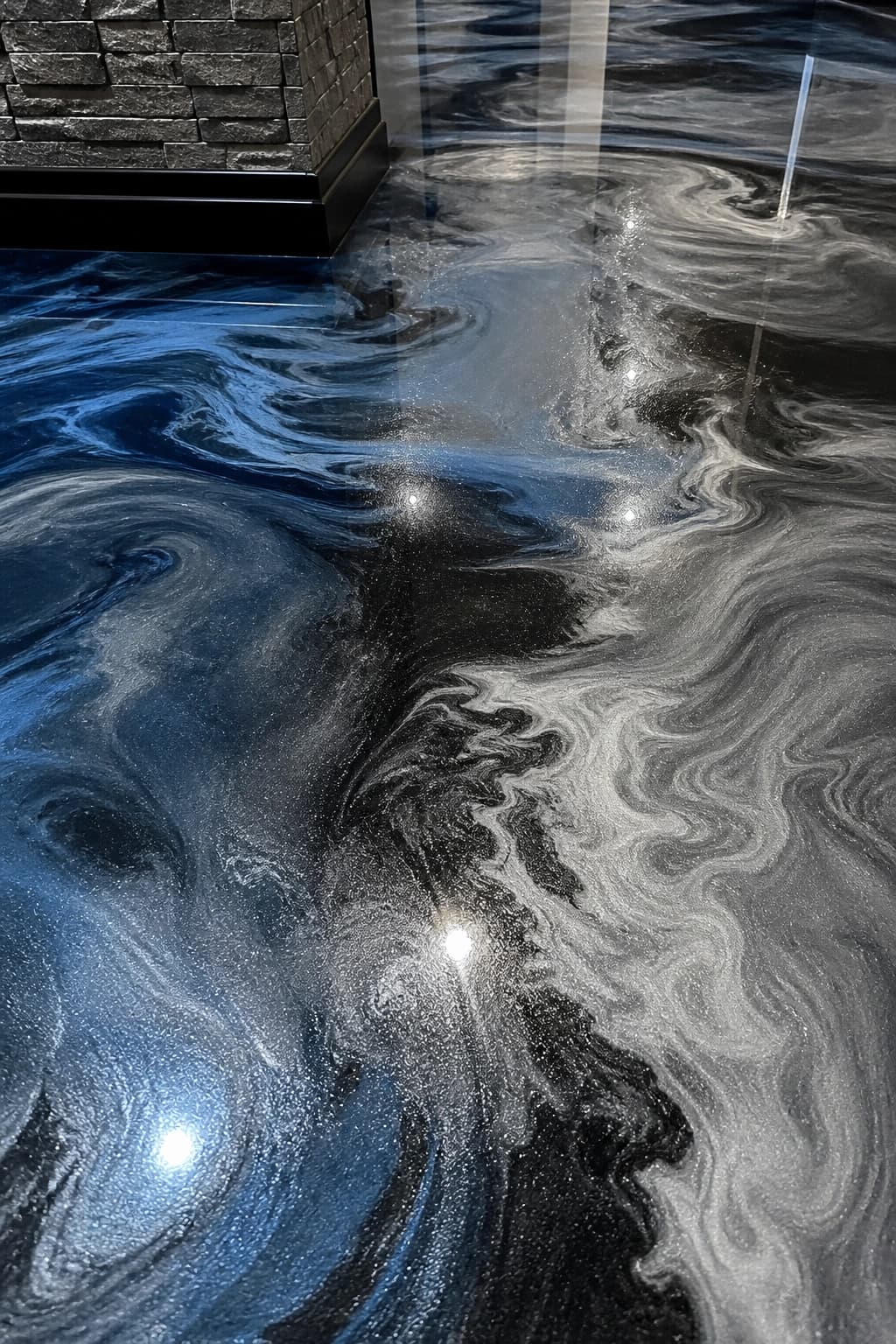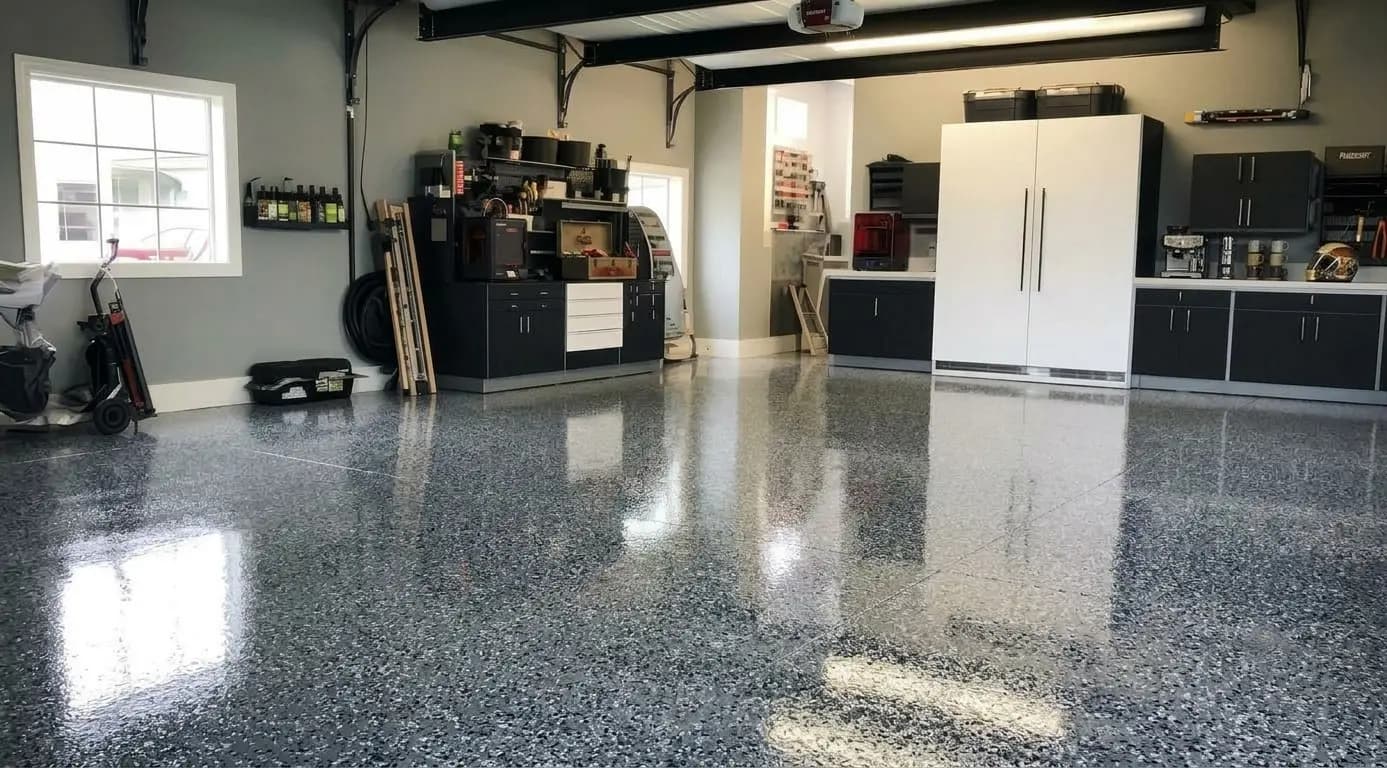
- Concrete preparation, local conditions, and personal finishing choices matter in choosing the best coating system.
- Epoxy and polyaspartic serve different purposes.
- Surface preparation can matter as much as coating choice.
- Wet climate rainwater, winter grime, road salts, and wet tires affect coating requirements.
- To compare complete coating systems, check the base coat, decorative layer, topcoat, traction additives, preparation method, and cure schedule.
- Choose around how your garage is actually used. Vehicle traffic, workshop activities, sunlight, chemicals, cleaning needs, and desired appearance should guide the final specification.
Concrete condition, usability, moisture, sunlight, winter season, traction, and time for curing , all matter to install a perfect coating system for your garage floor in Surrey.
Choosing a garage floor coating sounds simple until you start comparing products. One contractor recommends epoxy. Another suggests polyaspartic, while someone else says polyurea is the better choice.
The problem is that you can't judge garage floor coating systems by chemistry alone. Your concrete condition, vehicle use, moisture, sunlight, winter grime, required Traction, and available installation time all matter. The right floor for a heated hobby garage may differ from one handling two wet vehicles every winter.
For Surrey homeowners, another consideration is that the floor must cope with a damp coastal climate and everything your tires bring inside.
So, rather than asking which coating is universally "best," ask which system suits your garage.
What Are the Main Garage Floor Coating Systems?
Before comparing products, it helps to separate coatings from paints and sealers. They are often advertised together, but they do different jobs.
Epoxy Coatings
Epoxy is a two-component resin system widely used over concrete. When mixed and cured correctly, it produces a hard protective layer with good adhesion and chemical resistance.
Epoxy also gives installers plenty of design flexibility. Solid colors, decorative flakes, quartz, and different coating builds are all possible.
Traditional epoxies generally cure more slowly than fast-curing polyaspartic products. Some epoxy formulations can also yellow or change color with prolonged UV exposure.
That does not make epoxy a poor garage coating. It means you should choose the complete system around the conditions it will face.
For example, you can combine an epoxy base with a compatible topcoat when you need extra wear resistance or UV protection.
Polyaspartic Coatings
Polyaspartic coatings are known for fast curing and good UV stability. They are commonly used as clear finish coats over decorative flake floors, although complete systems vary by manufacturer.
Faster curing can substantially reduce garage downtime. That is useful when homeowners cannot leave vehicles outside for several days.
The same speed creates an installation challenge. Once mixed, some fast-curing products leave considerably less working time than traditional epoxy.
Professional application and careful planning therefore matter.
Polyurea Coatings
Polyurea is another resin chemistry you will encounter while comparing garage floors. It is often marketed for rapid curing and flexibility.
However, product names can become confusing quickly. "Polyurea," "polyaspartic," and combinations of both terms appear throughout the industry.
Instead of choosing from the label alone, ask what each layer actually is.
A contractor should be able to explain the base coat, decorative layer, clear coat, preparation method, and intended performance of the complete system.
Polyurethane Topcoats
Polyurethane is frequently used as a protective finish rather than the entire flooring system. Depending on the product, it can provide useful abrasion, scratch, and chemical resistance.
Different products also offer different gloss levels and performance characteristics.
Compatibility matters. A topcoat should be part of a specified system, not an arbitrary product added over another resin.
Concrete Paints and Penetrating Sealers
Garage paint offers an inexpensive cosmetic improvement. It does not provide the coating thickness or performance expected from a professional resin floor.
Penetrating sealers are different. Instead of creating a thick decorative layer, they penetrate the concrete and can help reduce water absorption or staining.
A sealer may suit homeowners who want to retain the appearance of concrete. It is not equivalent to a decorative epoxy, polyurea, or polyaspartic coating system.
How Do Garage Floor Coating Systems Compare?
Here is a practical way to understand the differences.
| Option | Main Strength | Main Limitation | Often Suits |
|---|---|---|---|
| Epoxy | Strong build and design flexibility | Slower cure; some types lack UV stability | Garages, workshops and decorative systems |
| Polyaspartic | Fast cure and good UV resistance | Shorter working time for installation | Garages needing quick return to service |
| Polyurea | Fast cure and flexible system options | Product properties vary considerably | Professionally specified coating systems |
| Polyurethane | Useful wear-resistant finish coat | Commonly one layer within a larger system | Epoxy and decorative flooring systems |
| Penetrating sealer | Preserves natural concrete appearance | Limited decorative transformation | Lower-maintenance bare concrete |
Tips for Choosing a Garage Floor Coating
Start With the Condition of Your Concrete
A premium coating cannot compensate for a poorly prepared slab.
Older Surrey garages may have oil contamination, pitting, cracks, previous coatings, or damaged concrete. Even a new slab should be assessed before coating.
Moisture conditions also matter. Some flooring systems have specific limits for moisture transmission through concrete.
Mechanical surface preparation, commonly diamond grinding or shot blasting, creates the profile the specified coating needs. Complete repairs with materials compatible with the flooring system.
If two quotes specify different preparation methods, do not compare them on price alone.
Think About How You Actually Use the Garage
A garage used for one commuter vehicle has different demands from a workshop.
Consider what happens on the floor every week. Do you park two vehicles inside? Work on cars? Store motorcycles? Move heavy equipment? Use the garage as a gym?
Vehicle fluids, road grime, tools, rolling loads, and cleaning frequency can influence coating selection.
A decorative full-flake finish may hide ordinary dirt and minor visual imperfections well. A workshop might place greater emphasis on chemical resistance and cleanability.
Decide How Much Downtime You Can Accept
Fast return to service is one reason homeowners compare an epoxy vs. polyaspartic garage floor.
Traditional epoxy systems may require longer cure periods before vehicle traffic. Polyaspartic products can cure considerably faster.
Do not rely on a generic promise such as "ready tomorrow." Cure schedules vary by formulation, temperature, coating thickness, and application conditions.
Ask specifically when you can walk on the floor and when you can park on it.
You can't Forget Traction.
A glossy floor can look excellent while dry and become slippery when wet.
That matters in Surrey because vehicles regularly enter garages carrying rainwater and winter grime.
Before installation, discuss how much traction additive to add to the appropriate finish coats. However, decorative flakes that add surface texture can improve traction but make mopping harder. The amount and grade should be balanced.
Why Garage Floor Coating Choice Matters in Surrey, BC
Surrey does not experience the prolonged deep-freeze conditions found in some Canadian cities. Moisture, however, is a major part of the local environment.
Wet vehicles repeatedly enter the garage during the cooler months. Tires can carry water, grit, de-icing residue, and road grime onto the floor.
Concrete itself is porous. If an older slab already has moisture or deterioration issues, covering it without a proper assessment can cause problems.
Temperature changes matter too. Concrete expands and contracts, while existing cracks may continue moving after coating.
No resin coating should be presented as a structural repair for an unstable slab.
Sun exposure also demands attention. Where appearance matters, a UV-resistant finish delivers better results. It helps to protect the area near an open garage door from unwanted color changes.
For these reasons, the best garage floor coating in Canada isn't simply the product with the strongest marketing claim. It is a properly specified system that suits the slab, climate exposure, and actual garage use.
Common Mistakes When Choosing a Garage Floor Coating
Comparing Only Epoxy Against Polyaspartic
This comparison misses half the story.
A garage floor may use one resin for the base and another for the finish. Decorative flakes, primers, moisture-control layers, repair products, and traction additives can also form part of the system.
Understand the importance of complete specifications. Product names alone are not enough.
Choosing the Cheapest Quote Without Comparing Preparation
Surface preparation requires equipment, labor, and time. That can create substantial differences between quotes.
Ask whether they will mechanically prepare the concrete. Also ask how they'll handle cracks, oil contamination, old coatings, and moisture concerns.
A cheaper coating over inadequate preparation is rarely a bargain.
No Preparation Plan For New Concrete
New does not mean coating-ready.
Fresh concrete needs adequate curing, and the surface must still meet the coating manufacturer's requirements. Surface contaminants or finishing conditions can also affect adhesion.
Have the slab evaluated before installation.
Ignoring Water and Winter Grime
Homeowners understandably focus on scratches and hot tires. In Surrey, wet-floor performance deserves equal attention.
Ask about Traction before selecting a very smooth finish. Also check how the proposed system handles salts and automotive fluids.
Focusing Too Much on Installation Speed
A one-day installation can be genuinely useful. It should not be the only reason for choosing a system.
Faster curing also gives installers less time to work. Proper grinding, repairs, mixing, broadcasting, scraping, and topcoating still need to be done correctly.
Never sacrifice preparation to advertise a faster turnaround.
So, Is Epoxy or Polyaspartic Better for a Garage?
Neither answer should be automatic.
Epoxy can provide an excellent high-build base with good adhesion when the slab is correctly prepared, and the product suits the environment. Polyaspartic offers fast curing and UV resistance that can make it particularly useful as a garage-floor finish.
Some professional systems intentionally combine different resin technologies to use their respective properties.
The better question is: What is each layer supposed to do?
If a contractor recommends a hybrid system, ask why. A clear explanation of the base coat, flakes, topcoat, surface preparation, and cure schedule tells you far more than the word "premium."
Get the System Right Before the First Coat Goes Down
A good garage floor starts with the concrete, not the color chart.
For Surrey homes, the decision should account for wet vehicles, road grime, traction, concrete condition, sunlight, downtime, and how you use the garage throughout the year.
Epoxy, polyaspartic, polyurea, and polyurethane all have useful applications. What matters is putting compatible materials together in a system designed for the job.
If you are unsure what your slab needs, experienced garage floor epoxy coating contractors can assess the concrete and explain the coating options before you commit to a system.