- Epoxy flooring has become a practical choice for many Surrey properties. It works well in garages, basements, workshops, warehouses, and commercial spaces.
- After coating, you will get a seamless surface on prepared concrete. It handles vehicle traffic, spills, abrasion, and routine cleaning effectively.
- Surrey's damp climate makes concrete preparation especially important before installation. Moisture problems can weaken adhesion and shorten the coating's service life.
- A successful epoxy floor therefore depends on more than resin quality. Concrete condition, preparation, coating thickness, and curing conditions all affect performance.
What is Epoxy Flooring?
Epoxy flooring is a resin-based coating applied over prepared concrete surfaces. The system combines epoxy resin with a compatible hardener.
Mixing both components starts a chemical reaction that hardens the coating. Once cured, it forms a dense surface bonded to concrete.
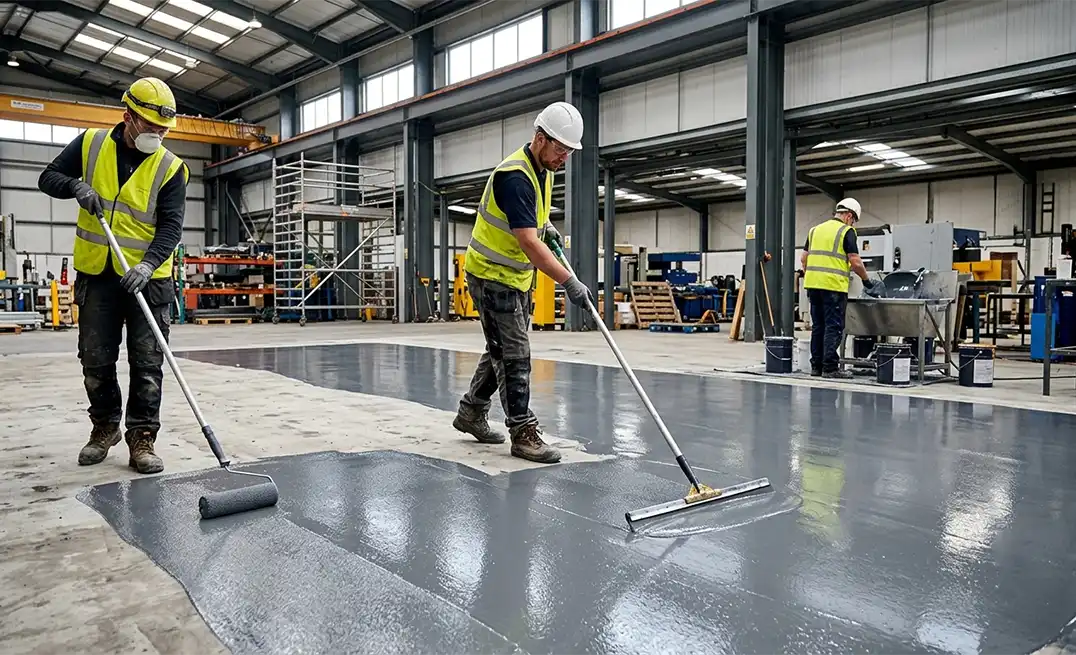
Professional installation normally begins with inspecting and preparing the concrete slab.
Diamond grinding removes contaminants while creating the profile needed for adhesion.
What is necessary before starting the coating? Repair cracks, pitting, and damaged areas, then moisture-test.
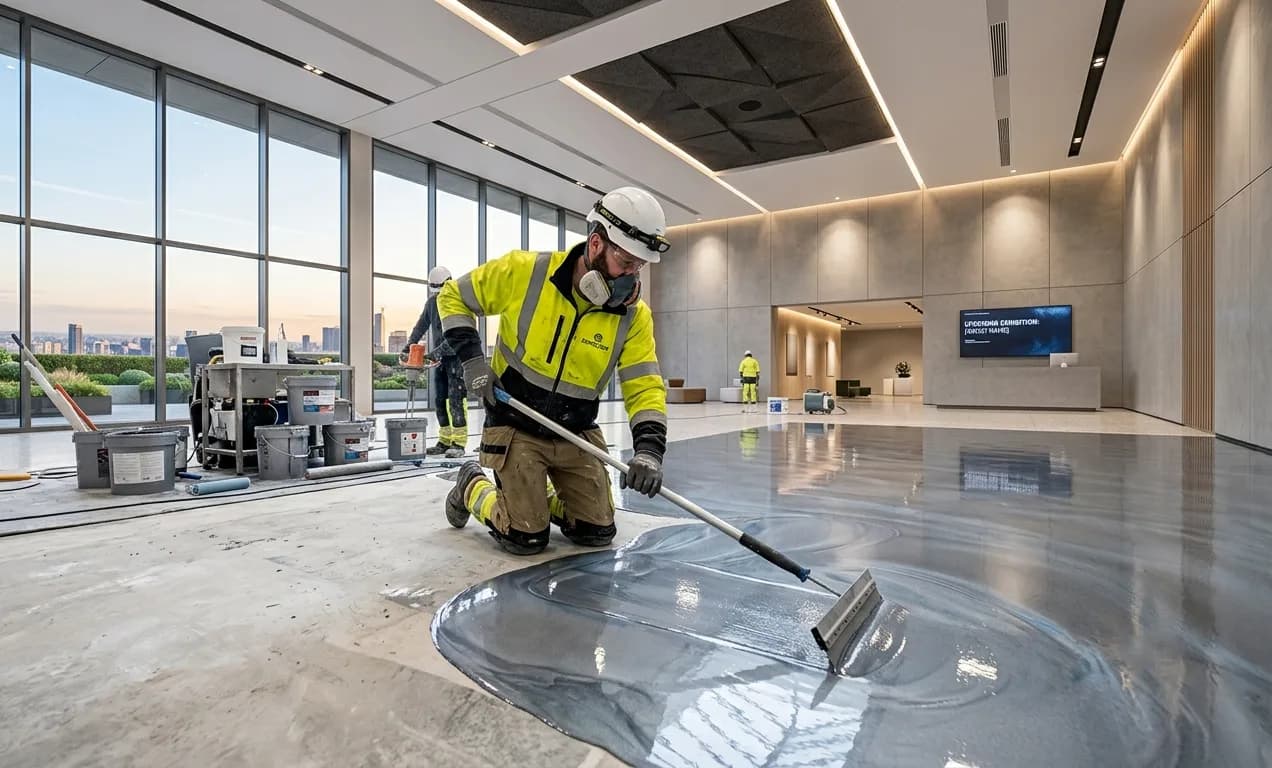
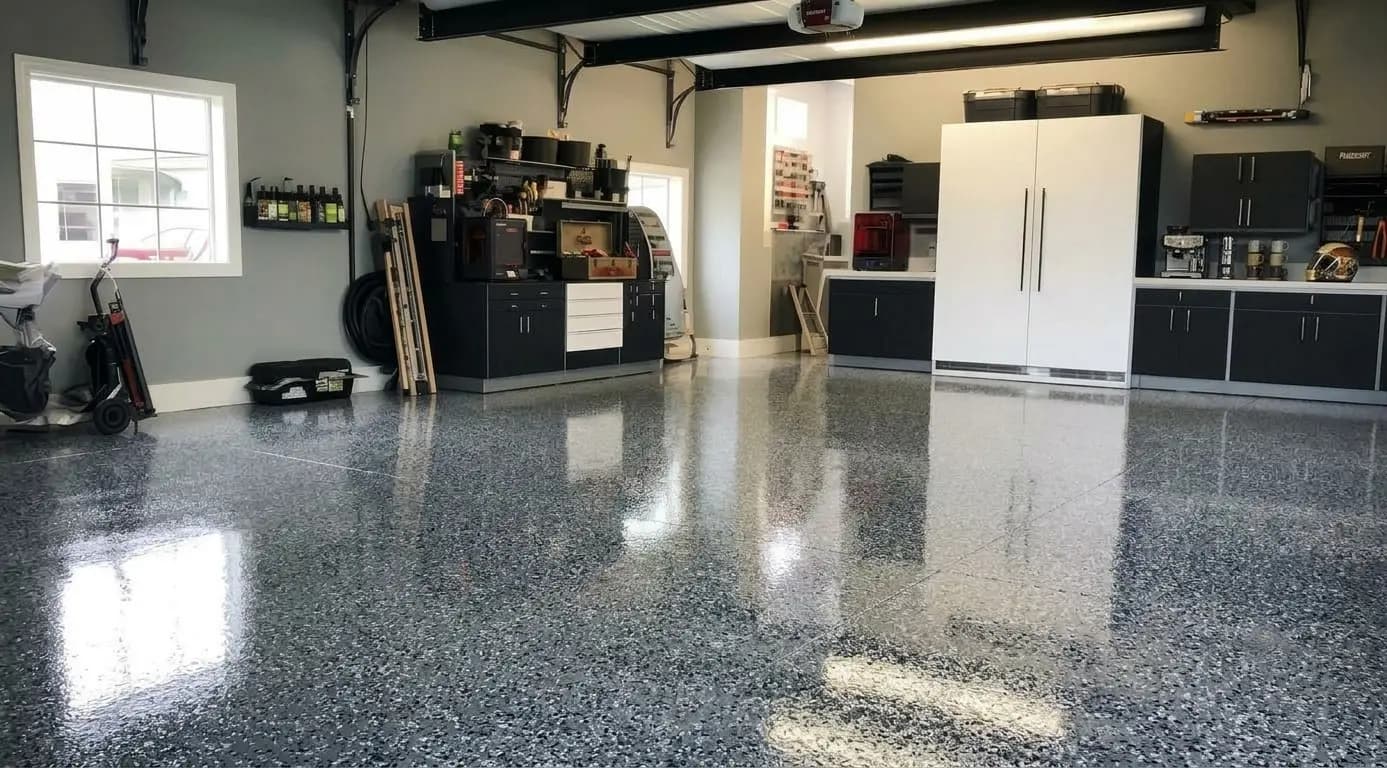
The installer then applies the selected primer, epoxy layers, and finish. Decorative flakes or quartz can provide texture, color, and additional traction.
Many garage systems also receive a durable clear protective topcoat. UV-stable topcoats help preserve appearance where sunlight reaches the floor.
Epoxy offers good resistance against abrasion and common automotive chemicals. Its seamless surface also prevents dirt from collecting between flooring joints.
Installation time depends on the products and number of coating layers. Traditional epoxy systems often require several days before you can resume vehicle traffic.
Temperature and humidity can also significantly affect working and curing times. Follow each product's manufacturer-specified cure schedule.
Is Epoxy Flooring Expensive?
Is it expensive to epoxy your floor? Not necessarily, but professional systems cost more than basic floor paint.
Across Canada, epoxy flooring commonly costs around C$3–C$12 per square foot. Professional installations in Surrey often fall in the middle or upper range.
First, square footage alone never determines the final project price. Labor costs for concrete preparation are also a major cost variable, including Grinding, crack repairs, coating removal, and moisture treatment.
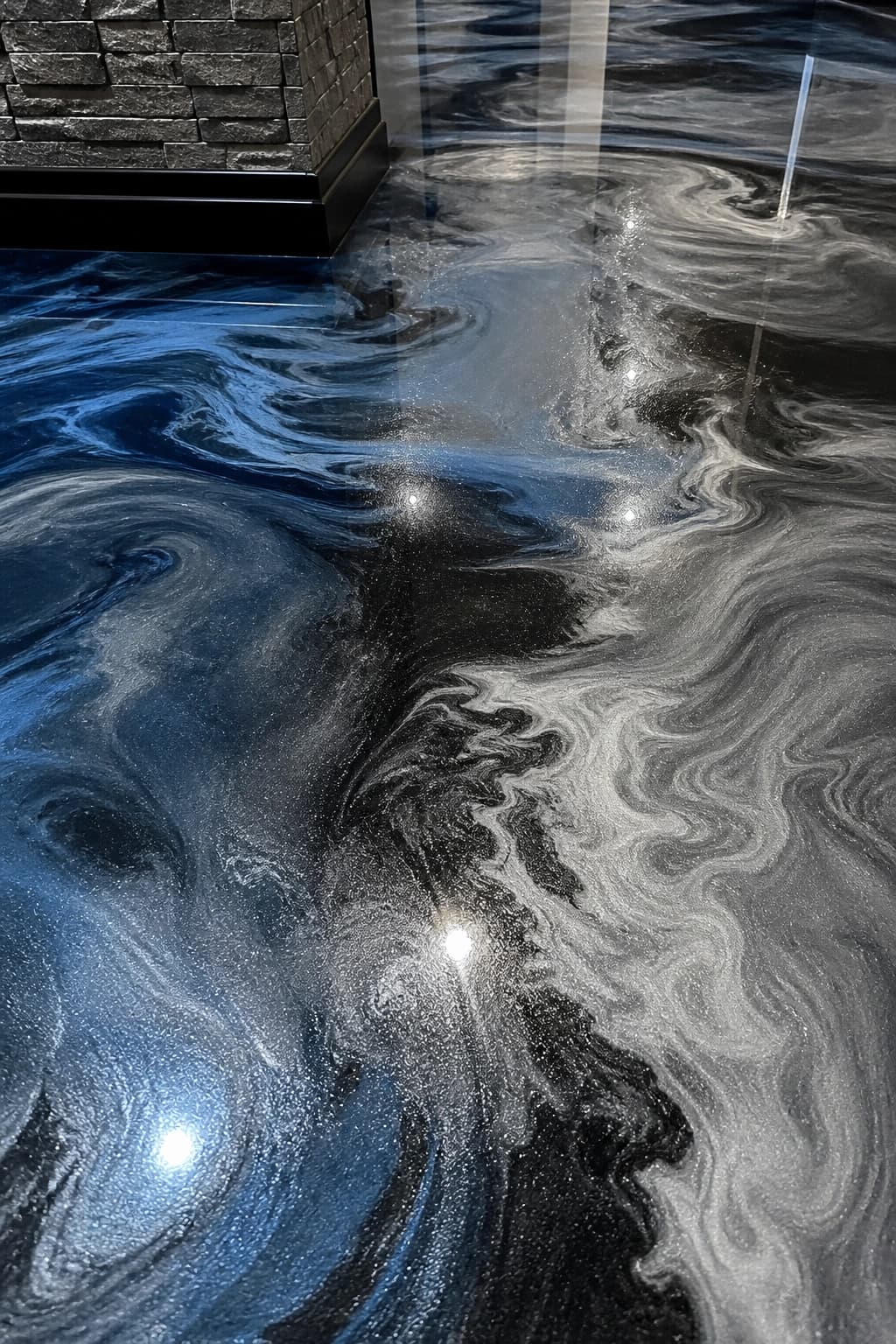
Material grade and floor thickness also play a key role in the final cost. Decorative flakes, metallic effects, quartz, and premium topcoats cost more.
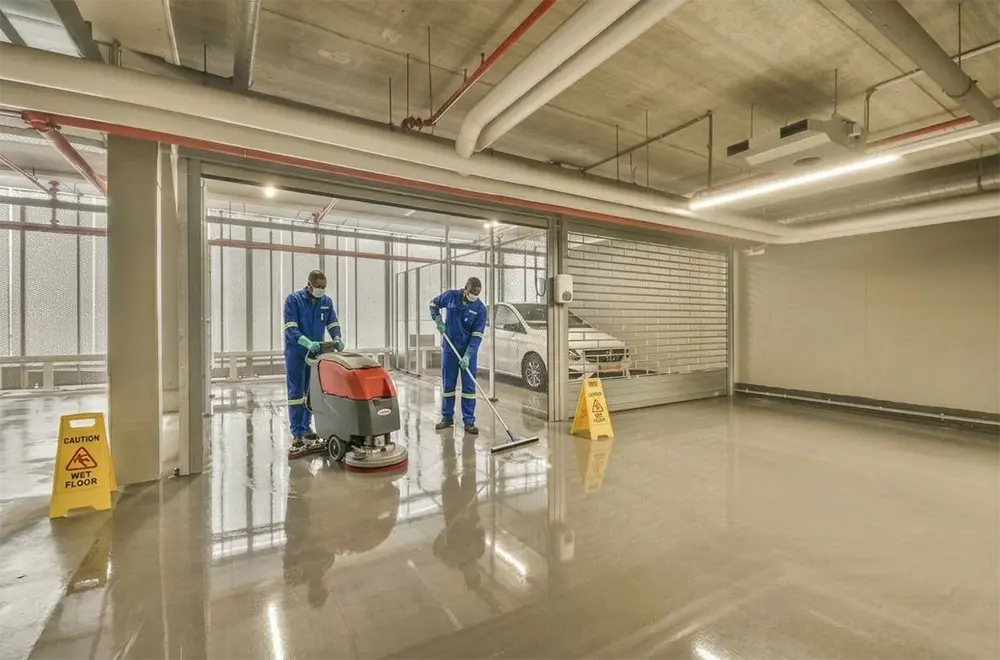
Commercial floors may require thicker systems for carts and rolling equipment. Slip-resistant finishes can also require additional aggregates and coating layers.
Keep in mind, cheap installation can become expensive when contractors cut corners on surface preparation. As a result, poor bonding may cause peeling, bubbling, or premature coating failure.
Ask contractors how they prepare concrete before comparing their estimates. The coating specification matters as much as the quoted price.
Lifespan of an Epoxy Floor
One of the most common questions is, "What is the lifespan of an epoxy floor?" Epoxy lifespan depends on floor preparation, coating thickness, and maintenance.
Residential epoxy commonly lasts several years; with quality systems, it can last up to ten years.
But industrial floors can wear faster because of handling heavier loads daily.
Garage floors experience different stresses from basement or showroom floors. Vehicle tires, road salts, dropped tools, and grit accelerate surface wear.
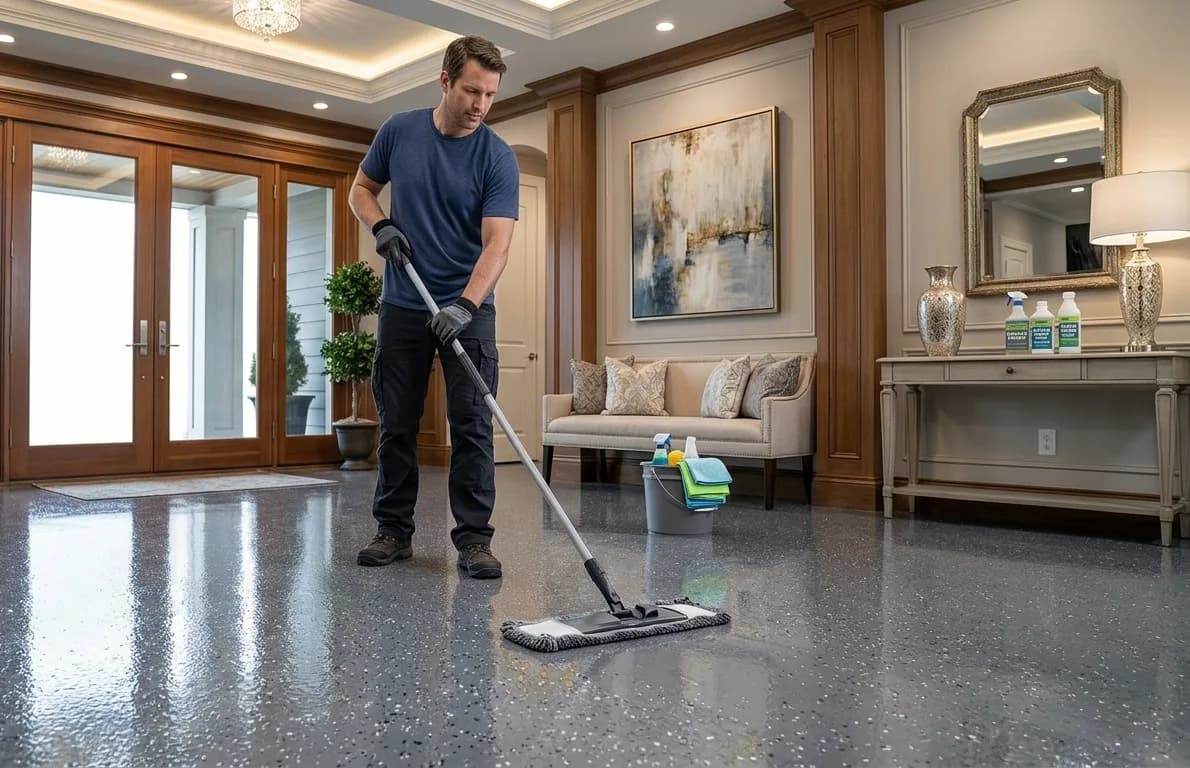
Proper maintenance does not require complicated equipment or specialist cleaning products. Sweep up abrasive debris regularly and clean spills before residue builds up.
Avoid dragging sharp metal objects directly across the finished surface. Protective pads can reduce scratching beneath heavy cabinets and equipment.
What do epoxy floors look like after 5 years? A well-installed floor should remain smooth, bonded, and easy to clean.
Some high-traffic areas may show light scratches or reduced surface gloss. Sun-exposed sections can discolor when unsuitable topcoats were originally installed.
Peeling should not be assumed automatically. Widespread delamination often shows preparation, moisture, or adhesion problems.
Decorative flake systems can make minor imperfections noticeable. Their patterned finish also hides dust better than solid glossy colors.
After preparation, older floors can sometimes receive another compatible protective topcoat. This can refresh appearance without replacing the entire flooring system.
The best lifespan starts with choosing the right system from the start. Garage, basement, retail, and industrial floors have different performance requirements.
For a floor designed around your concrete condition and daily use, discuss the project with an experienced epoxy flooring contractor in Surrey.