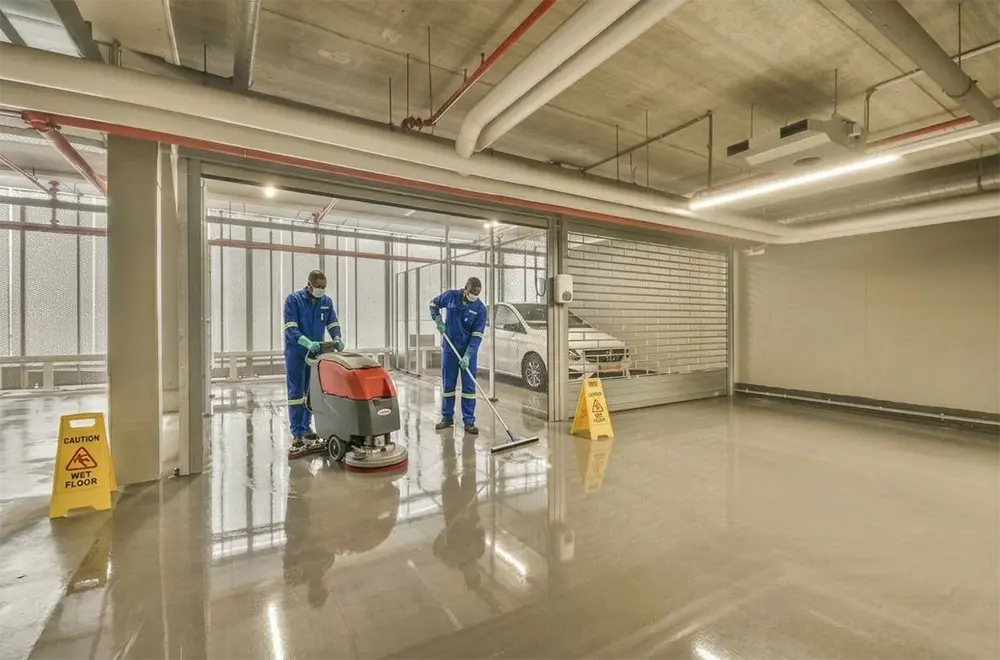
- Sweep first, mop second. Otherwise, loose sand and grit can scratch your floor.
- Use a suitable pH-neutral cleaner. A good option, but it must be approved for your coating system.
- Clean oil, tire marks, and road salt early. Fresh stains are usually easier to remove.
- Avoid harsh chemicals and rough brushes. They may dull or damage the finish.
- A simple weekly routine goes a long way. Regular care can help your epoxy floor last longer.
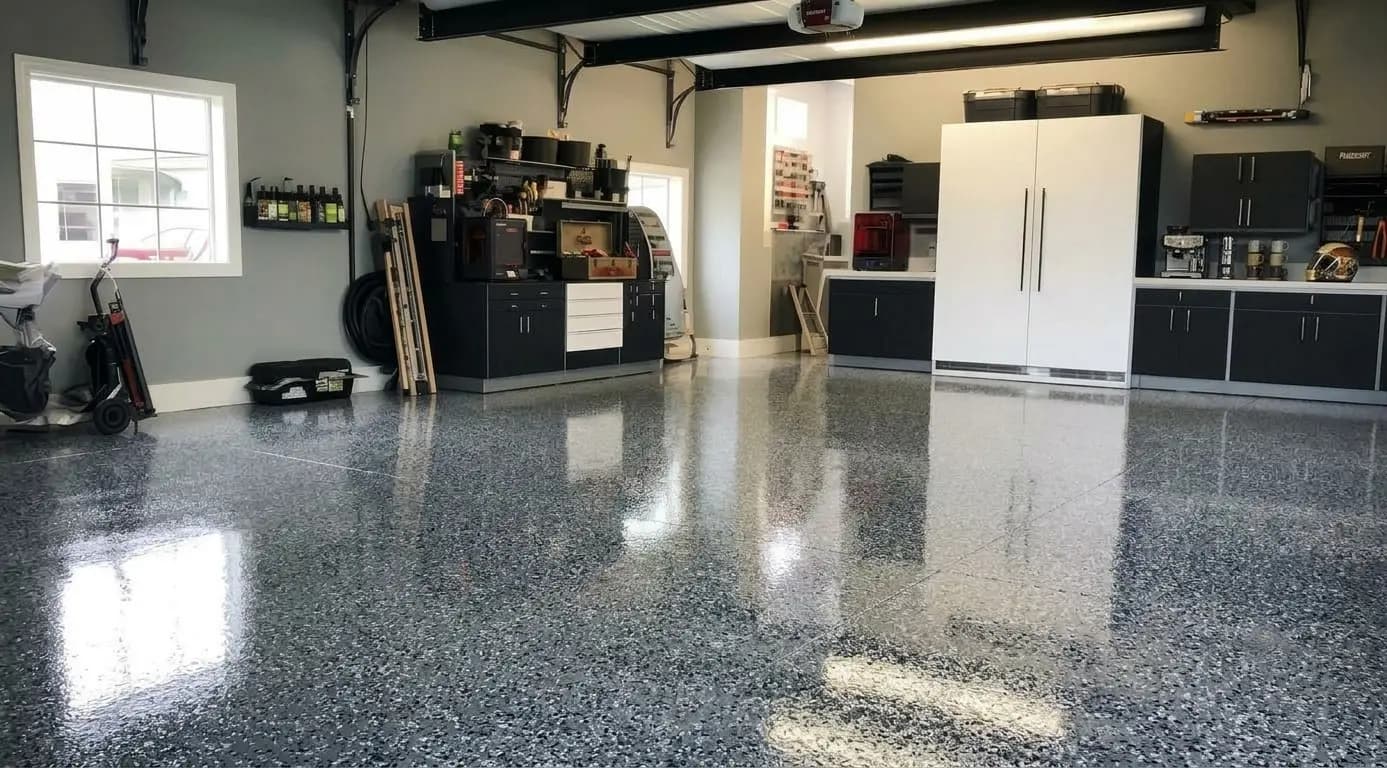
An epoxy garage floor can make your garage look cleaner, brighter, and more welcoming. But even a strong floor coating needs a little care to stay in good shape.
First, understand what your garage floor deals with each day. Dirt from car tires, mud from shoes, and small oil-drip marks are common. Rainy weather also means wet tires, puddles, and road grime.
So maintaining a garage floor can be tougher than maintaining a normal epoxy floor.
The good news? Cleaning an epoxy garage floor is easier than cleaning bare concrete. You don't need expensive equipment or hours of scrubbing.
Choosing the right garage floor coating system is not enough on its own to last long. Routine maintenance matters too.
This guide is about how to clean your epoxy garage floor and maintain its shine for years.
How to Clean an Epoxy Garage Floor Yourself: Step by Step
Wondering how to clean an epoxy garage floor without hiring someone?
Do as most garages do. You need a few basic tools and the right cleaning method.
What You'll Need
- Soft-bristled broom or dust mop
- One warm water bucket
- An approved pH-neutral floor cleaner
- Microfibre mop or soft cloth
- Soft nylon brush for stubborn spots
- Squeegee or clean towels
Step 1: Clear the Garage Floor
Move small items, boxes, mats, and anything else sitting on the floor.
You don't have to empty the entire garage for a quick clean. Just make enough space to reach the areas that collect the most dirt.
Pay special attention to the spots where you park your car.
Step 2: Sweep Away Dust and Loose Dirt
Before adding water, sweep the floor with a soft-bristle broom.
Remove sand, tiny stones, leaves, and other debris. These small particles can scratch the coating when you drag them across the surface.
Quick tip: If you use a shop vacuum, choose a floor attachment that won't scratch the finish.
Step 3: Prepare a Mild Cleaning Solution
Mix a pH-neutral floor cleaner with warm water in a bucket, as an epoxy garage floor contractor suggested.
Avoid adding extra cleaner. More soap doesn't always mean a cleaner floor. Too much can leave a sticky or cloudy film.
If you're unsure which product to use, check your garage floor installer's care instructions.
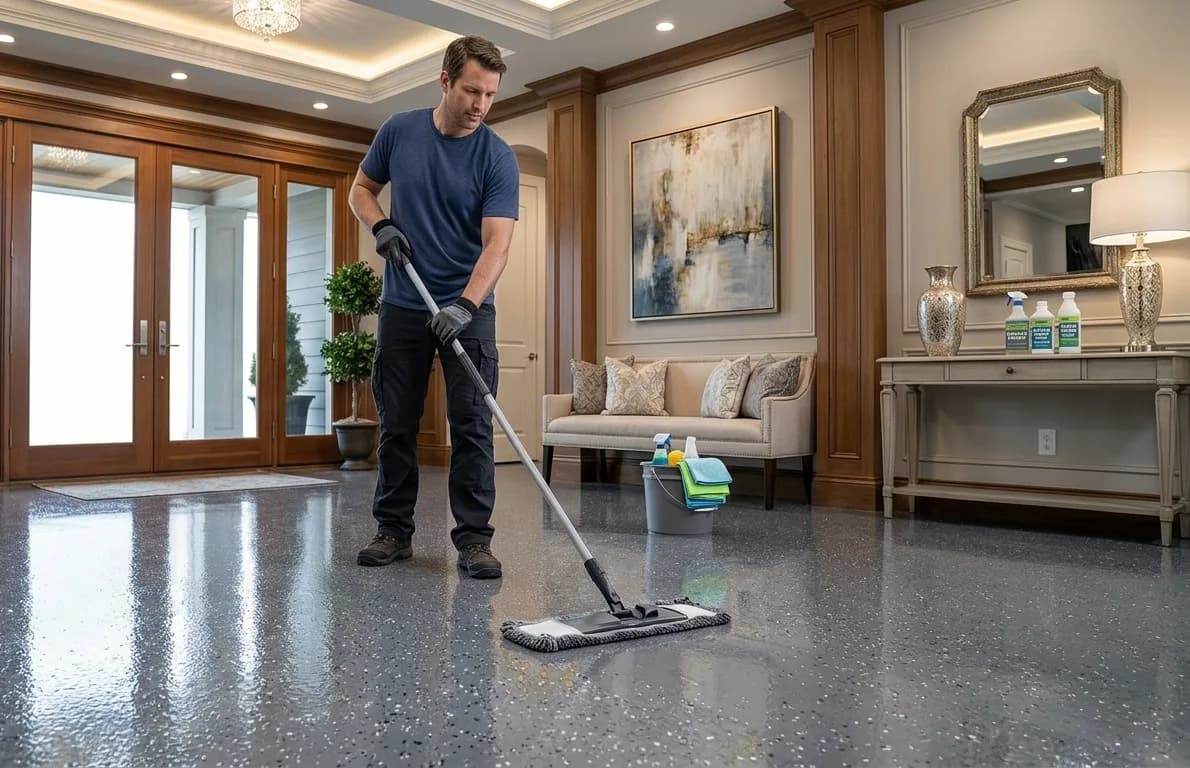
Step 4: Mop the Floor Gently
First, dip the mop into the cleaning solution, then wring out the excess water.
A common approach is to start at the back of the garage and work toward the door.
For dirty spots, let the cleaner work for the time listed on its label. Then gently scrub with a soft nylon brush.
There's no need to scrub hard.
Step 5: Rinse and Remove Dirty Water
Use clean water to rinse the floor if the cleaner's directions require it.
Remove the dirty water with a squeegee, wet vacuum, or clean mop. Don't let dirty cleaning solution dry back onto the surface.
If your garage has no suitable drain, collect the water rather than pushing it into the street or a storm drain.
Step 6: Let the Floor Dry
Allow the floor to dry before moving items back or parking your vehicle.
Open the garage door for airflow when weather permits.
That's it! A little sweeping, gentle mopping, and proper drying can keep an epoxy garage floor looking fresh.
What Is the Best Cleaner for an Epoxy Garage Floor?
Both the cleaner and how often you clean matter. However, just warm water may be enough for light dust and mud. Otherwise, a pH-neutral floor cleaner approved for epoxy or the installed topcoat works well for everyday dirt.
Some coatings can also be cleaned with a small amount of mild dish soap. However, too much soap can leave a film if you don't rinse well.
If your floor has a polyaspartic or polyurethane topcoat, follow the care instructions for that finish. Not all garage coatings have the same chemical resistance.
What Should You Avoid Using on Epoxy Floors?
To protect the surface, avoid using the following products unless your coating manufacturer specifically approves them:
- Vinegar and acidic cleaners: Repeated use may dull some finishes.
- Strong bleach or harsh chemical cleaners: These may affect the coating's colour or appearance.
- Steel wool and stiff wire brushes: They can leave scratches.
- Abrasive cleaning powders: These can wear down the glossy surface.
- Strong solvents: Products such as paint thinner and acetone may damage certain coatings.
- Wax or oily polish: These can leave residue and make the floor slippery.
Always test a new cleaner in a small, hidden area before using it across the floor.
How to Remove Common Stains From an Epoxy Garage Floor
Even a well-maintained garage floor can get stained. From oil drips to black tire marks, each problem needs a slightly different cleaning method.
Here's how to tackle the most common ones.
1. How to Remove Oil and Grease Stains
Oil spills are common in garages, especially if you park an older vehicle or work on your car at home.
The best approach is to clean the spill as soon as you notice it.
What to do:
- An absorbent cloth or paper towel is best.
- Apply a mild degreaser as directed.
- Let it sit for a time.
- Gently scrub (a soft nylon brush can be used)
- Wipe up the cleaner, rinse if directed, and dry the area.
Avoid spreading the oil across the floor while cleaning.
For large fuel, battery acid, or unknown chemical spills, follow the product's safety and spill instructions rather than treating them like ordinary dirt.
2. How to Remove Tire Marks From Epoxy Floors
Have you noticed black marks where your car tires sit?
Warm tires can sometimes transfer rubber compounds onto a coated floor. These marks may be more noticeable on light-coloured finishes.
You can clean this area easily with a pH-neutral cleaner and a soft cloth.
For marks that won't lift, try a coating-safe degreaser. Let it work, then scrub gently and rinse.
Don't use a rough scrubbing pad. It may remove the mark but leave scratches behind.
If the surface has softened, peeled, or been damaged, the problem may be more than a surface stain.
3. How to Remove Road Salt and White Residue
Road salt is a common concern for garage floors in Canada.
In cold weather, snowmelt and road residue often come in on your tires.
To remove it:
- Sweep away dry grit and loose salt.
- Wipe or mop the area with warm water.
- Use a pH-neutral cleaner if needed.
- Rinse and remove the dirty water.
- Dry the surface.
Don't leave salt and grit sitting on the floor all winter. Regular removal helps reduce wear and keeps your garage looking cleaner.
4. How to Remove Mud and Dirt
Mud is often the easiest mess to deal with.
Let heavy mud dry enough that you can remove it without spreading it. Then sweep it up and mop the area with warm water.
For dried-on dirt, soften it with a little water before wiping it away.
Avoid scraping the surface with metal tools.
How Often Should You Clean Your Epoxy Garage Floor?
You don't need to clean your garage deep every weekend.
The best cleaning schedule depends on how often you use the space, the weather, and how much dirt your vehicle brings in.
Here's a simple routine for most Canadian households.
| When | What to do |
|---|---|
| As soon as possible | Clean oil, chemical spills, and fresh stains |
| Every week | Sweep loose dirt, sand, and dust |
| Every month | Mop with a suitable mild cleaner |
| During wet or snowy weather | Remove excess water, salt, and road grit more often |
| Every 3–6 months | Deep clean and check for signs of damage |
This schedule is a starting point, not a strict rule. A garage used as a workshop may need more frequent care than one used mainly for storage.
How to Maintain an Epoxy Garage Floor for Long-Lasting Results
Epoxy flooring is known for its durability, but no coating is completely maintenance-free. Good habits help protect the finish and reduce unnecessary wear.
Keep Sand and Grit Off the Floor
Small stones and sand can act like sandpaper when car tires roll over them.
Sweep regularly, especially near the garage entrance.
Use Mats in High-Traffic Areas
A suitable garage mat compatible with your coating can help catch dirt and moisture.
Some rubber-backed products may leave marks on certain finishes.
Avoid Dragging Heavy Objects
Dragging metal shelves, toolboxes, or heavy equipment can scratch the floor.
Lift heavy items when possible. Use suitable protective pads beneath workbenches and storage units.
Clean Spills Without Delay
Although epoxy coatings can resist many common stains, that doesn't mean that every chemical is safe to leave on the floor.
Clean spills promptly using a method approved for the coating.
Check for Chips and Peeling
Look over your garage floor from time to time.
If you notice peeling edges, cracks, bubbling, or lifted areas, contact a flooring professional.
Cleaning helps preserve a healthy coating, but it cannot repair a coating that has already failed.
Epoxy Garage Floor Cleaning Tips for Surrey and the Lower Mainland
If you live in Surrey, Vancouver, Langley, Delta, or nearby communities, you already know how much rain the region can get.
That wet weather can affect what ends up on your garage floor.
During Rainy Months
Wet tires bring water, dirt, and road grime into the garage.
Remove standing water instead of letting it sit in puddles. A squeegee can make this job easier. Keep leaves and grit away from the entrance so you don't track them inside.
During Winter
The Lower Mainland usually has milder winters than many other parts of Canada, but snow, freezing temperatures, and road de-icers can still be an issue.
After a stretch of winter weather, check for white salt residue and gritty deposits around your parking area.
Sweep and rinse them away when practical.
During Spring
Spring is a good time for a deeper garage clean.
Move stored items, wash the floor, clean along the edges, and inspect the coating for signs of wear.
This can also help you spot small problems before they become larger ones.
Can You Pressure Wash an Epoxy Garage Floor?
In some cases, yes. But you don't need pressure washing for regular epoxy garage floor cleaning.
A soft mop, mild cleaner, and clean water are often enough.
A pressure washer is another option, but only after the installer confirms it is safe./p>
Use a gentle setting and a wide spray pattern. Keep the nozzle moving and avoid directing a strong stream at floor edges, joints, or damaged spots.
Never pressure wash a floor with peeling or loose coating. The water pressure may make the damage worse.
When in doubt, stick to a garden hose or damp mop.
How to Clean Epoxy Floors Without Dulling Them
A shiny epoxy floor can lose its fresh look when dirt, grit, or cleaning residue builds up. Fortunately, dullness doesn't always mean the coating is damaged.
Try these steps first:
- Sweep the floor to remove grit.
- Mop with an approved pH-neutral cleaner.
- Rinse away any cleaner residue.
- Remove dirty water rather than letting it dry on the floor.
- Let the surface dry fully and check the finish.
If the floor still looks cloudy, check whether the haze is on the surface or part of the coating itself.
Repeated scratches, worn topcoats, and chemical damage won't disappear with more cleaning. In those cases, a flooring professional can help determine whether you need repairs or a recoat.
Final Thoughts: Keep Your Epoxy Garage Floor Looking Its Best
Keeping an epoxy garage floor clean doesn't have to be a big job.
A quick weekly sweep, gentle monthly wash, and prompt stain removal can make a real difference.
The key is using the right cleaner, avoiding harsh scrubbing, and paying attention to seasonal dirt and moisture.
With regular care, your garage floor can stay clean, attractive, and easy to maintain for years.
Need Help With Your Epoxy Garage Floor in Surrey, BC?
At Seven Shades Epoxy Coating LTD, we help homeowners in Surrey and surrounding Lower Mainland communities improve their garages with professionally installed epoxy flooring systems.
Whether you're planning a new garage floor or want guidance on an existing coating, our team can help you explore the right solution.
Contact Seven Shades Epoxy today to discuss your flooring needs.
QUESTIONS
Frequently Asked Questions.
Yes. You can do most routine cleaning with a soft broom, microfibre mop, warm water, and a coating-safe cleaner. You usually don't need special equipment.